
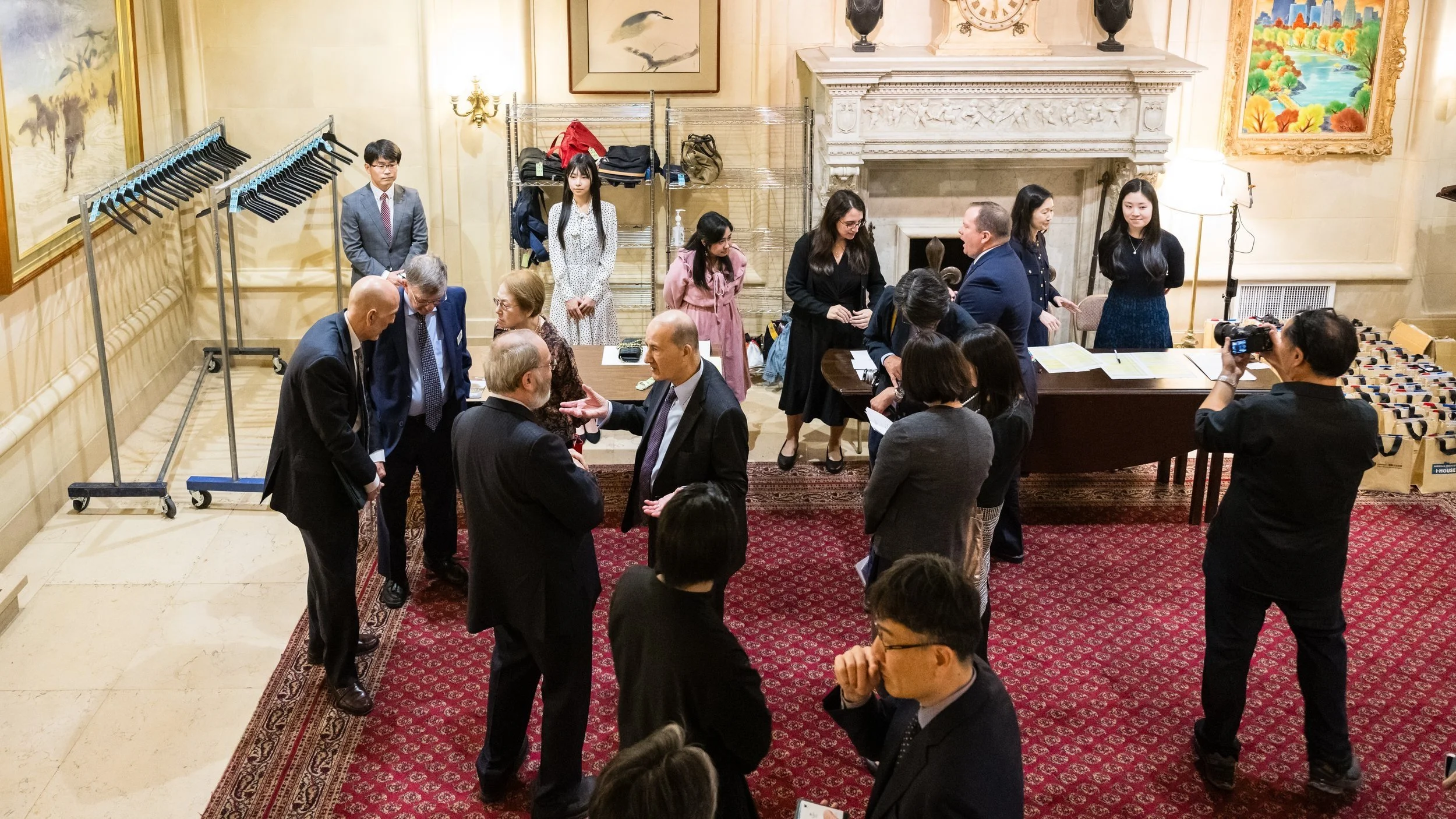
IHJ Member Spotlight
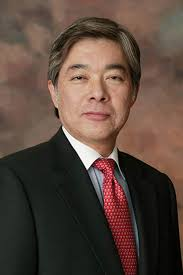
MR. GLEN S. FUKUSHIMA
Visiting Fellow, Stanford University
Vice Chairman, Securities Investor Protection Corporation
Senior Fellow, Center for American Progress
“Try new things and take prudent risks.”
Mr. Glen S. Fukushima first connected with the International House of Japan in 1971 and has had multiple contacts with the organization spanning over 50 years. When he was an exchange student at Keio University from Stanford University in 1971-1972, Keio Professor Fuji Kamiya wrote a letter to IHJ Managing Director Mikio Kato that allowed him to use the IHJ library. In 1979, when he was a student at the Harvard Business School, he was selected to participate in the Japan Business Fellows Program (administered by the IHJ and the Japan Society in New York), in which five MBA students from American business schools spent the summer in Tokyo working in Japanese companies. These positive experiences led him to register officially as an IHJ member in 1979. In 1982, when he was a Fulbright Fellow at the University of Tokyo, he started the Ph.D. Kenkyukai, a study group for American university students conducting dissertation research in Japan, and he arranged for the IHJ to host the group in an IHJ seminar room for its meetings. This Ph.D. Kenkyukai inspired other graduate students in Japan from both China and Korea to form similar study groups that the IHJ also hosted. Mr. Fukushima was an informal adviser to the IHJ in the early 2000s and served as an IHJ Trustee from 2013 to 2016.
Glen is currently a Visiting Fellow at Stanford University, Vice Chairman of the Securities Investor Protection Corporation, Senior Fellow at the Center for American Progress, and a philanthropist who has contributed to U.S.-Japan exchange at the Fulbright Commission, Japan-America Student Conference, Stanford University, and Harvard University.
We are so pleased that we had the opportunity to interview Glen and to learn more about his work and his connections to the International House of Japan.
Q & A Section
Q. Looking back, is there a piece of advice that you have received that has been especially valuable in your professional and/or personal life?
Try new things and take prudent risks. For example, in high school I was accepted by the six colleges I applied to, but I chose to attend Deep Springs College, a private junior college established in 1917 and located in a desert valley in California with a unique curriculum of academic study, manual labor, and student governance. Often called the most selective American college that no one has heard of, the acceptance rate was under 2 percent, and the freshman class of 10 students had the second highest SAT average in the country (next to Caltech). My parents and friends advised me to attend one of the better known schools that had accepted me such as Stanford, Reed, and Pomona, but attending Deep Springs turned out to be one of the best life decisions I made.
Q. If you could summarize your experience with the IHJ in one word, what would it be?
Exchange. The IHJ is a fabulous venue and forum that allows for the exchange of ideas, activities, programs, and people between Japan and other countries, including especially the United States.
Q. If you could pass on a piece of advice to someone, what would it be?
I always advise students to study abroad. This gives you exposure to new ideas, new people, and new ways of thinking and doing. Your perspectives and horizons are broadened, you become more flexible and adaptable, and you end up understanding better your own country and culture in a global context.
Q. You have donated $1 million to the Fulbright Program to support American students to study in Japan and Japanese students to study in the United States, and $1 million to the Japan-America Student Conference. What do you think is the most important part of study abroad programs, and how do you think they can help shape future leaders in the U.S.-Japan exchange? What do you hope students would gain from these study abroad experiences?
I support study abroad programs because they help students become more open-minded, innovative, flexible, tolerant, and receptive to new ideas and new ways of doing things. To solve the global challenges we face, we need global cooperation. It is hard to fully understand others or to work effectively with them if you are confined only to your own country or culture. Studying abroad equips students to expand their ability to cooperate with others across countries, cultures, religions, and other borders and barriers.
Q. Philanthropy has shaped a lot of your experiences and actions, especially as it relates to investing in human capital through scholarships and education. What advice would you give individuals considering donating to an organization, and how would you describe the importance of philanthropy?
People have different reasons for making charitable contributions. In my case, I have in the past contributed to activities I consider important – art, music, film, wine, and politics. But in my old age, I’ve come to the conclusion that education is key for the future of our country, our world, and our planet. Educating the next generation to be global in their outlook, values, and work styles is key to solving the many challenges we face.
Q. With the 80th anniversary of the conclusion of World War II occurring last year in 2025, what do you hope will be the future of U.S-Japan relations? How can AFIHJ and IHJ collaborate to ensure the flourishing of that relationship?
The relationship between the United States and Japan since the end of World War II has been remarkably successful and beneficial to both countries and the world. However, there is a tendency to take the relationship for granted, and there is a need to update and renew the relationship to adjust to changes in the global environment. This requires conscious effort by both countries. Although the national governments of the two countries set the framework and tone of the relationship, there is much that the local governments (such as states, prefectures, and cities) and nongovernment actors (such as corporations, educational institutions, the media, NGOs, and NPOs) can do to strengthen the ties between the two countries. The IHJ and AFIHJ can play a vital role in this effort.
Q. What has interested you the most, or made you the most excited, about the work AFIHJ does?
AFIHJ plays an essential role in expanding IHJ’s activities outside of Japan and allows for those residing in the United States and Canada to engage more deeply with the IHJ and to support its activities without being physically present in Japan.
Q. What are a few discussion topics or projects you would like to see the International House of Japan engage more both in Japan and in North America? Are there any topics you are passionate or care about that you would like to see the International House address?
As someone who worked at USTR (Office of the United States Trade Representative) for 5 years and was a business executive for 22 years, I would be interested in the IHJ focusing more attention to economic issues like trade, investment, finance, technology, and business. The IHJ has had many programs on politics, policy, culture, education, etc., but the importance of the economy is likely to grow, which is one of the reasons that I’m spending this year as a Visiting Fellow at Stanford University doing research on the ties between Silicon Valley and Japan.
Q. What is a question you never get asked, but would love to answer?
When I spoke recently at a conference in San Francisco on U.S.-China relations, about 30 percent of the participants were Chinese Americans. When I attend events on U.S.-Korea relations, many Korean Americans participate. When I attend events on U.S.-India relations, many Indian Americans participate. Why is it that when I attend events on U.S.-Japan relations, I am often the only Japanese American participant? I have the answer, but it’s not what most people think.
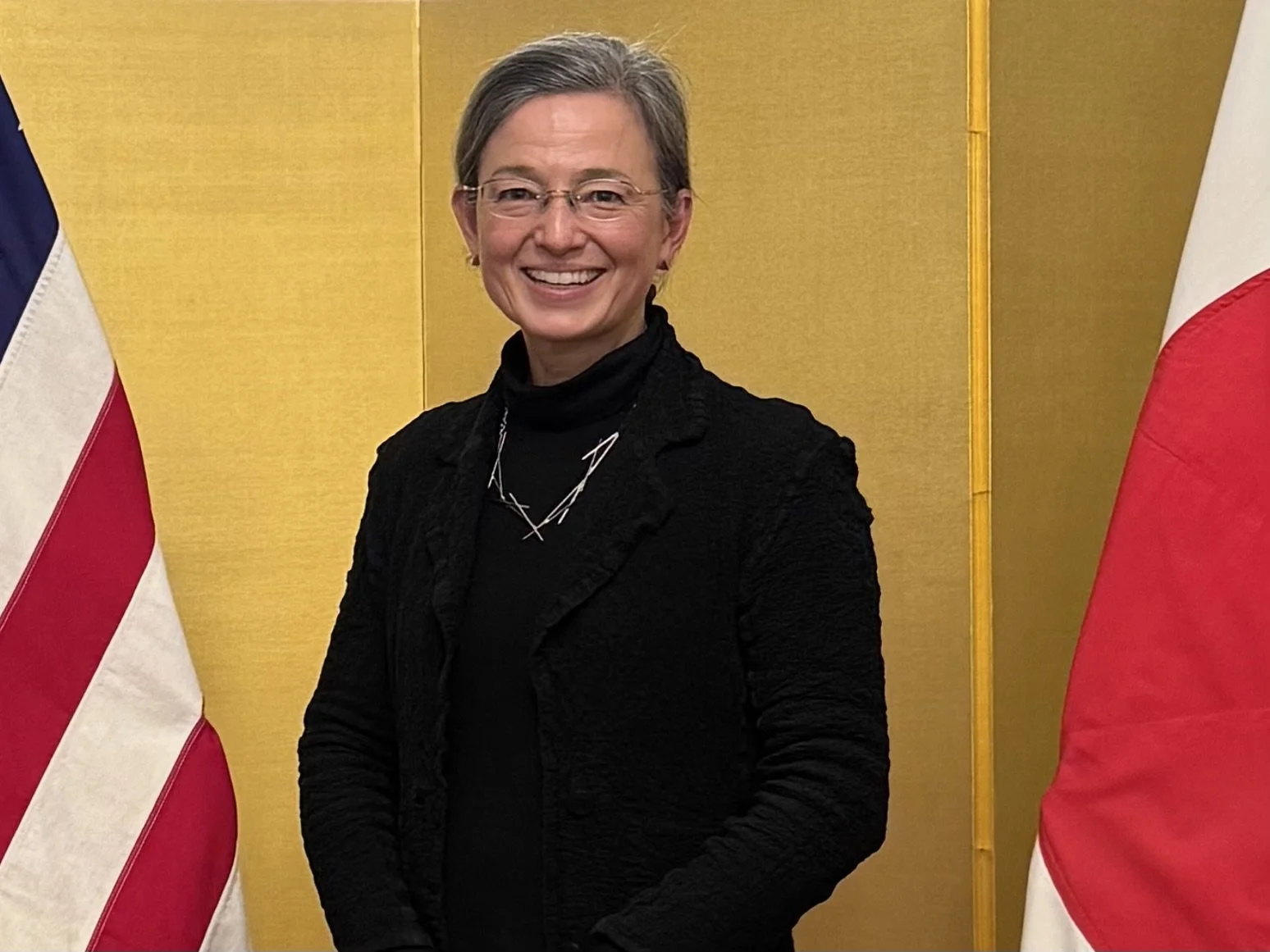
MS. CHRISTINE PILCAVAGE
Managing Director, Japan, MIT International Science and Technology Initiatives, Massachusetts Institute of Technology (MIT)
“Homecoming” - When asked if she could describe her experience with the International House of Japan in one word.
Christine Pilcavage is a member of the International House of Japan and a Board Member and Secretary of the American Friends of the International House of Japan. Her journey in the world of Japanese affairs began long before she became a member in 2016. Christine was born and raised in Japan and her mother is Japanese.
Christine is currently the Managing Director of the MIT-Japan Program at Massachusetts Institute of Technology. She collaborates with MIT students, faculty and staff, sharing her culture and bringing a touch of Japan to the MIT community. She also helps build partnerships with Japanese companies, research institutes, universities, and startups, connecting MIT students with research opportunities and internships across Japan.
We had the wonderful opportunity to meet virtually with Christine to ask her questions about her experience as a member of the International House of Japan and as a leader in the American Friends of the International House of Japan.
Q & A Section
Q: Looking back, is there a piece of advice that you have received that has been especially valuable in your professional and/or personal life?
A: Growing up, my mother always told me: “make sure you say your greetings, your AISATSU.” The word Aisatsu is much more encompassing than a mere greeting. It’s hello and goodbye. I believe Aisatsu is culturally engrained—it combines respect with “wa” or harmony—a greeting that anticipates gratitude and appreciation. This is the advice I take to heart and offer to others is to say your Aisatsu.
Q: What originally drew you to working in Japan-related international exchange, and what keeps you passionate about it today?
A: It is part of my DNA. I was born into it.
Q: When did you first get involved with the American Friends of the International House of Japan, and what inspired you to take on a leadership role within the organization?
A: I became involved in AFIHJ primarily because of David Janes. I’ve known David since 2000 and who doesn’t want to work with David! David asked me to join AFIHJ and I said YES!
Q: How can IHJ better engage university students or rising professionals who want to form deeper ties with Japan?
A: IHJ can organize more events and conferences partnering with local universities to draw and engage students. To make these opportunities more accessible, IHJ should consider offering discounted rates for membership and accommodation to ease the financial burden that students face.
Q: What do you see as IHJ’s biggest strengths in fostering cross-cultural dialogue?
A: Being a neutral space where diverse views —especially on controversial topics—are welcome.
Q: What are a few discussion topics or projects you would like to see the International House of Japan engage more both in Japan and in North America? Are there any topics you are passionate or care about that you would like to see the International House engage in?
A: I enjoy cooking and would love to see programs that touch on food and cooking. For example, exploring ties between the history and influence of Japanese food in the U.S. as well as the reverse impact of American food in Japan cuisine. Another topic that I am interested in is the effect current U.S. tariffs have on food, culture, and health. What are the implications of these trade policies on the food that you buy or eat at markets and restaurants in Japan and the U.S.?
Q: What do you hope is the future of U.S.-Japan relations and the International House of Japan?
A: I hope I-House continues to be that bridge between Japan and other nations that bring people together, a welcoming and safe place where we can convene conversations on fun as well as difficult and controversial topics. I hope people will think of the I-House as a portal and primary resource for knowledge of Japan and for cultural exchange.
Q: What has interested you the most, or made you the most excited, about the work AFIHJ does?
A: Having more cross pollination across the different organizations. For example, I’ve enjoyed attending the joint collaborations with Japan-America societies in North America and Asia Society. Through partnerships and better programming, we are able to find ways to strengthen ourselves and have dialogues that can reach larger audiences. When you do things alone you have limited resources and might miss perspectives, but with partnership and diversity you can magnify impact.

MR. CARL HOFFMAN
CEO and Co-Founder of BasisTech
“Listen to your inner voice… especially when making important decisions.”
Mr. Carl Hoffman has been a committed member of the International House of Japan since 1985, following in his parents’ footsteps. He became influenced to be a member of the International House because of his parents’ involvement from the early to mid 70s. Hoffman has many memories from staying at the International House spanning back to when he was 13 years old and living in Okinawa. Since attending graduate school, the International House has been his home away from home where he can engage in interesting activities like discussion groups, symposiums, conferences, and seeing old friends.
Hoffman is the CEO and Co-Founder of BasisTech, which works with entrepreneurs to refine ideas, attract talent, access capital, and accelerate growth. Learn more about BasisTech here: https://www.basistech.com/.
We sat down with Mr. Hoffman and had the opportunity to ask him questions related to both his work and his time as a member of the International House of Japan.
Q & A Section:
Q: If you could summarize your experience with the IHJ in one word, what would it be?
A: Community.
Q: If you could pass on a piece of advice to someone, what would it be?
A: Listen to your inner voice…especially when making important decisions.
Q: How does your experience living and working in Japan aid you in doing business with Japanese companies?
A: Living in Japan helped me understand the professional economic environment that many foreigners with no experience do not. They tend to assume that the environment in Japan is similar to what they experience in the U.S., which is not the case. There are different business protocols and ways that people work together; for example, the role of lawyers in business, litigation (much more common in the U.S.) and the length of time to build a trusting relationship.
Q: What was one of your favorite decisions you made in your professional life?
A: To become an entrepreneur.
Q: When you think back on your career, what’s a risk you took that really paid off?
A: Becoming an entrepreneur.
Q: How do you see AI impacting cross-cultural communication and the future of business?
A: Many of the newer AI models are deeply capable in cross-cultural communication and AI can build on a lot of the progress we have seen in machine translation to facilitate cross-cultural communication and collaboration. It can become a collaborative participant in brainstorming, dispute resolution, and more across language and cultural boundaries.
Q: What do you hope is the future of U.S. - Japan relations and the International House of Japan?
A: A generic answer you would probably get from a lot of people is for the U.S. and Japan to continue to strengthen and build their ties. A more specific answer would be for Japan to change its laws to permit dual or multiple citizenship. When someone leaves Japan and settles in the West, they have to choose between citizenship in Japan or their adopted country. I think this is hurting Japan because second or third generations are less likely to travel to Japan for extended periods of time and develop deeper roots there.
Q: What are a few discussion topics or projects you would like to see the International House of Japan engage more in both in Japan and in North America?
A: I would like to see the I-House facilitate or host more discussions concerning national security. Although they have done this in the past, the security landscape has changed dramatically. I think they should invite Rahm Emanuel, former U.S. Ambassador to Japan, to speak about the national security situation, especially since Japan needs to start engaging differently with its allies in Asia and in the West in the area of national security.

DR. KEN RUOFF
PROFESSOR OF HISTORY AND DIRECTOR OF THE CENTER FOR JAPANESE STUDIES AT PORTLAND STATE UNIVERSITY
Meet Dr. Ken Ruoff
“It is a soothing place to go back to.” - when asked to summarize his experience with the International House of Japan (IHJ).
Our next member spotlight features Dr. Ken Ruoff. Dr. Ruoff has been a devoted member of the International House of Japan since the mid-1990s when he was completing the field work for his Ph.D. dissertation at Hokkaido University. He would regularly visit Tokyo during this time to visit archives and meet with people, staying at the International House of Japan while doing so, thanks to Professor Jun Furuya. Professor Furuya convinced him to become a member of the International House of Japan.
Dr. Ruoff is currently Portland Professor of History and the Director of the Center for Japanese Studies at Portland State University. He has written several books about the Imperial House. He helped to establish and build the Center for Japanese Studies at Portland State and has helped organize over 300 programming events since 2001 when the Center was established.
We sat down with Dr. Ruoff and asked him questions related to his time as a member of the International House of Japan.
Q & A Section:
Q: If you could summarize your experience with the IHJ in one word, what would it be?
A: Peaceful. I have had numerous times flying from the U.S. to the Tokyo airport, and it would be pretty late U.S. time when I would land. I would get to the I-House jet-lagged, but everything would be fine once I got there. It is a soothing place to go back to, especially the garden. Once you get back to the I-House, you feel like you can breathe, and it’s peaceful.
Q: Looking back, is there a piece of advice that you have received that has been especially valuable in your professional and/or personal life?
A: My freshman year of college, our college administrators told everyone to study what they love and not to worry if it led to a good income or not. I believe that you should study what you love, within reason, and you’ll do fine because you love it.
Q: What is a connection you have made during your time as a member that you are forever grateful for?
A: During a conference at the I-House that I was a speaker for, I talked to a representative from the Toshiba Foundation during a break. He came up to me and told me I should be applying for funding from the Toshiba Foundation for the programming that happens through the Center for Japanese Studies at Portland State University. We have received funding from the Foundation multiple times since. Those types of introductions are fortuitous. The I-House is about bringing people together, and I am sure there are thousands of stories along the same lines as mine, people who made connections that led to something interesting.
Q: How has your involvement with the IHJ impacted your life?
A: One of my books was born over breakfast at the I-House. The nicest thing about the I-House is that you can come down for breakfast and see someone who you haven’t seen in a few years. My mentor, Carol Gluck, was at the I-House, and I had breakfast with her. I had the topic of my second book on my mind, should I focus on the 2600th anniversary celebrations of the imperial dynasty, or should I focus on the far right in postwar Japan? After talking with Carol, I decided to run with the 2600 anniversary celebrations. But next I shall write a monograph about the far right in postwar Japan in a global context.
Q: You have done a lot of research regarding imperial events in Japan. How can we use historical imperial events to understand the present and future?
A: Due to the memories of WWII, many people continued to view the Imperial Household as an institution that encourages the wrong tendencies in Japan. In fact, today the Emperor spends most of his time sincerely trying to make Japan and the world a better place, especially in areas that would help the most vulnerable members of Japanese society.
The Imperial Household of today is dramatically different from that of wartime Japan. It used to be a symbol that was employed to encourage the takeover of Asia during war. Now, the new Emperor has taken on international causes. He is especially interested in the topic of water. Even though Japan has access to clean water, people in many places across the world do not. He has adopted a worldwide issue to try to help the most vulnerable in the world as well.
It can be difficult for people in Asia in particular to recognize that Japan has changed and that postwar Japan is so different from wartime Japan.
Q: During your time at Portland State University, you have organized many programs dedicated to promoting Japanese culture. What are a few of the favorite programs that you have organized, were there any challenges in implementing these programs, and how do you believe cross-cultural understanding can impact our collaboration with others?
A: I was one of a few people who came together to start the Center for Japanese Studies in 2001, and I played a meaningful role in building it into what it is today. We are approaching more than 300 related events; roughly we have 12-14 a year. One of our memorable programs featured Beate Sirota Gordon, who was on the team that wrote the postwar constitution and advocated for equality for the sexes. She came to Portland State to give a talk and was unbelievably dynamic and hilarious. She helped write Article 24 of the Postwar Constitution, which guaranteed equality of the sexes. She also served as the interpreter for the famous session between the American and Japanese sides, all 36 hours of it. When it came to negotiations regarding Article 24, according to Beate, Colonel Kades asked the Japanese side to accept it because the “nice lady” who had been interpreting the entire session had written it. She became a heroine among Japanese women because of Article 24.
Another program we put on was, “Kanpai Japan: A Celebration of Japanese Food and Drink Culture,” where people get to experience the food and drinks of Japanese culture. Food is a very important academic topic and reins in nationalism because almost all foodstuffs exhibit transnational hybridity.
Q: What do you believe will be the future of Japan and U.S. relations?
A: I hope that the two countries continue to be united by shared values. Japan, in recent years, has expanded upon the previous diplomacy of focusing mainly on business and now has taken on a significant value-based diplomacy. Going forward, I hope that we continue to share these values of democracy with Japan.

Ms. Izumi NakamitsU
UNDER-SECRETARY-GENERAL AND HIGH REPRESENTATIVE FOR DISARMAMENT AFFAIRS, UNITED NATIONS
Meet Ms. Izumi Nakamitsu
“Of course, the world is changing dramatically, and not all are positive changes. But you have to always believe that you can be a change agent and you can indeed change the world – for the better.” - when asked what advice she would give younger students.
Our first member spotlight features Ms. Izumi Nakamitsu, an avid member of the International House of Japan (IHJ). She appreciates and values the platform IHJ creates for fostering deep dialogues among individuals from many cultures.
Ms. Nakamitsu is the High Representative for Disarmament Affairs at the United Nations and has been a member of the International House of Japan for many years. She became a member of IHJ after Mr. Yasushi Akashi, the first Japanese United Nations staff member and her former boss, encouraged her to join the I-House during a get together at the the I-House restaurant.
AFIHJ’s Research and Social Media Intern, Natalie Janssen, interviewed Ms. Nakamitsu and engaged her in a conversation about her time at the International House of Japan and her work at the United Nations. Please see the Q&A below:
Q&A Section:
Q: If you could summarize your experience with the IHJ in one word, what would it be?
A: Collaboration; Also, identity in the sense of Japan’s identity in the world.
Q: Looking back, is there a piece of advice that you have received that has been especially valuable in your professional and/or personal life?
A: Mrs. Ogata, former UN High Commissioner for Refugees in the 90s, [who wrote her doctoral dissertation at the I-House] said to find creative ways to solve problems and be a risk taker to find new solutions to new challenges. When the world is changing, we need to be forward-looking.
Q: What do you believe the role of U.S.-Japan relations is in addressing large global questions?
A: With the 80th anniversary of the UN and the end of WWII, we need to reflect on how to protect the international order on the basis of international law. These are fundamental questions about global stability. The world is shifting, and the United States, as the largest economic, political and military power, is at the center of this massive shift. Independent of the governments, the civil society and citizens of the two countries should think about what they can do together for a better, more prosperous and secure world.
Q: What do you believe is the future of the International House of Japan and U.S.-Japan relations?
A: I hope that the future is active and proactive with lots of dialogue between the two countries that I-House can continue to facilitate and be the center of these key debates. It is not just a friendship society, but it is anchored in interesting policy dialogues between the two countries.
Q:What do you believe is the best way for the International House of Japan to navigate the current political climate, particularly in terms of its role in international affairs and relations with Japan?
A: Things are very unpredictable and unclear at the moment; we need to stay calm and not be driven by rushed emotions. We need to focus on data and evidence-based rational policy making. I think I-House can contribute to such debates with longer-term interests, rather than rushing into trying to respond to the immediate situations.
Q:What is a question you wish people asked you more often? What would be your response?
A: I get asked a lot about being a woman occupying a senior position at the UN in international peace and security and the disarmament field. I hope people rather ask me about the substance of my work on peace and security itself. I also wish people would ask me more often about the realities and the truth of the United Nations. The UN is not a utopian idealistic institution. Rather, it was created as a collective security system to achieve a more secure and peaceful world based on the UN Charter, and through diplomacy and negotiations at the center.
Q: In what ways can institutions like the IHJ facilitate dialogue on conflict resolution?
A: It is a platform for people from the U.S. and Japan with wide-ranging expertise and perspectives who are able to look at the issues related to conflict, war, stability, and the world order. I hope that the I-House will continue to be that platform and a safe place for people to discuss difficulties, not just tackling specific topics on the surface, but also deeply seeded in understandings of respective cultures.